


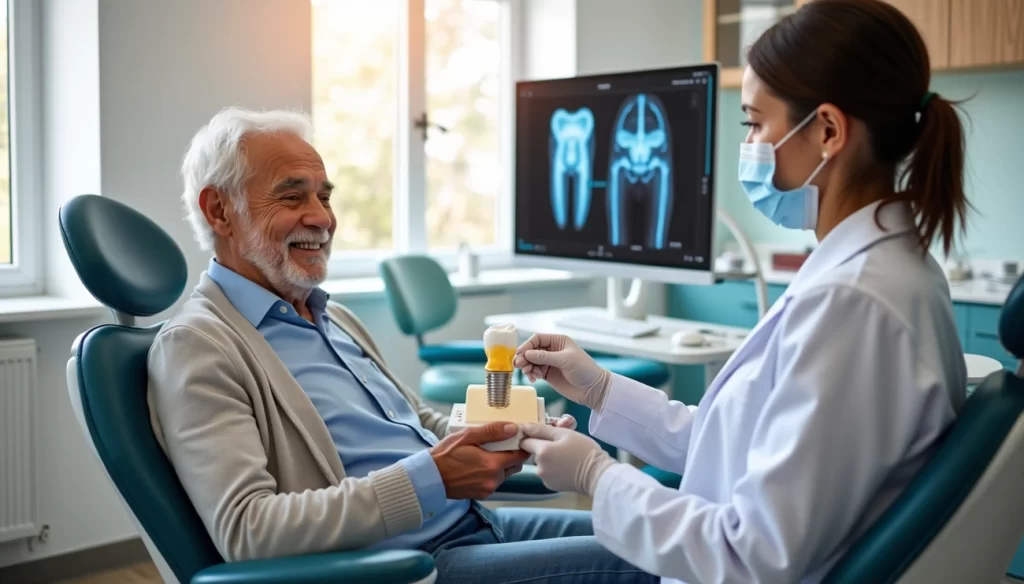
Is there a dental implant right age, or can anyone benefit from this tooth replacement option? Contrary to what many believe, age alone rarely disqualifies someone from getting dental implants. In fact, dental implants boast an impressive success rate of around 95% across various age groups.
While younger patients must wait until their jawbones fully develop, there’s no strict upper dental implant age limit for seniors. Studies show implant survival rates of 96.2% after 5 years and 91.2% after 10 years in patients 65 and older. Furthermore, geriatric patients (75+ years) demonstrate excellent results with 96.1% success after 5 years. Despite common concerns about aging and bone loss, modern dentistry offers solutions like bone grafts that make implants accessible to most age groups.
In this comprehensive guide, we’ll explore how age influences dental implant decisions, specific eligibility criteria for different life stages, and the health factors that truly determine your candidacy for this life-changing dental procedure.
Why Age Matters in Dental Implant Decisions
Age plays a complex role in dental implant decisions, though not always as a limiting factor. The biological impact of aging on bone quality and healing capacity requires careful consideration when planning implant treatment.
Research shows that older adults (66-80 years) experience significantly higher early implant failure rates (14.56%) compared to middle-aged adults (51-65 years) who demonstrate only 0.64% failure Additionally, implant survival at 6 months drops to 85.4% in the 66-80 age group versus >95% in younger patients
Bone density naturally decreases with age, particularly in postmenopausal women, potentially affecting implant integration and stability. However, studies indicate that age itself is not the primary risk factor; rather than chronological age, the specific health conditions associated with aging more significantly impact successful outcomes .
For younger patients, the primary concern is incomplete jaw development, as placing implants too early can interfere with natural growth patterns. Consequently, most practitioners recommend waiting until skeletal maturity (typically age 18-21).
Recent research suggests that advanced age (≥75 years) alone does not contraindicate implant therapy. Some studies even report that age has a slightly protective effect on marginal bone loss around implants . The right dental implant age depends more on individual health factors than on birthday candles.
Eligibility Criteria by Age Group
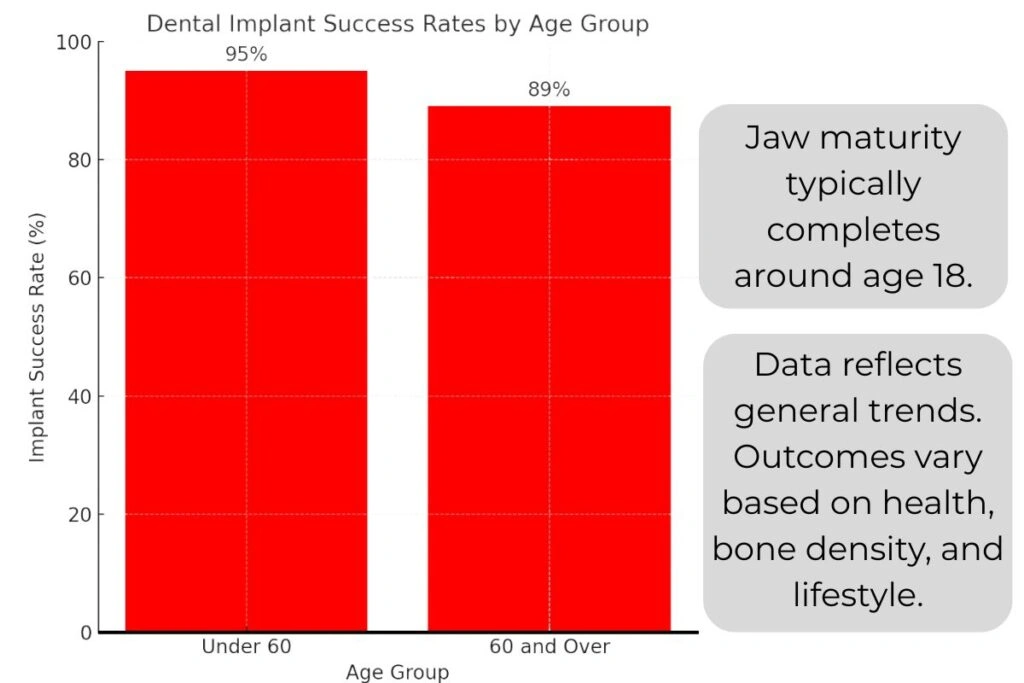
Dental implant candidates fall into distinct age categories, each with specific considerations. For children and teenagers, dental implants are generally contraindicated until jaw development completes. Girls typically reach skeletal maturity around 15-16 years old, whereas boys must wait until approximately 17-18 years Nonetheless, some professionals recommend waiting until at least 18 years for both genders, with many suggesting early 20s as the safest timeline.
Placing implants prematurely risks significant complications. Dental professionals use several methods to assess readiness, including hand-wrist X-rays and cephalometric analysis to confirm growth cessation . Essentially, when the middle phalanges of the third finger show capping (MP3cap), this indicates completion of maximum growth velocity .
For middle-aged adults (40s-60s), implant candidacy often reaches optimal conditions. This age group frequently experiences tooth loss yet maintains good bone density and healing capacity . Middle-aged patients show excellent success rates, with only 0.64% early failure rates according to some studies.
Notably, there exists no upper dental implant age limit. Seniors in their 70s, 80s, and even 90s can successfully receive implants . Although older adults may experience slower healing times and potentially require bone grafting due to density loss , success rates remain remarkably high—over 95% . Primarily, overall health status rather than chronological age determines eligibility across all groups.
Health and Lifestyle Factors That Influence Success
Beyond chronological age, several health and lifestyle factors substantially impact dental implant success. Research indicates smoking increases implant failure risk by 123% , with effects more pronounced in areas of poor trabecular bone quality. Moreover, smokers experience significantly higher marginal bone loss after implant placement .
Bone health remains crucial regardless of age. Although osteoporosis affects bone density, it doesn’t automatically disqualify candidates . Instead, modified treatment approaches, including larger implant diameters and surface treatments, can compensate for compromised bone .
Nutritional status likewise influences healing and longevity. Calcium (1000-1200mg daily) supports bone density, vitamin D (600-900 IU daily) facilitates calcium absorption, and protein expedites soft tissue repair. Additionally, vitamin C aids collagen synthesis, supporting connective tissues around implants.
Systemic conditions require careful management. Well-controlled diabetes poses minimal risk , whereas uncontrolled diabetes compromises healing and increases infection risk . Interestingly, obesity shows positive association with peri-implantitis in almost all studies examining this relationship .
Oral hygiene practices remain indispensable for long-term success . Patients are considered “cotherapists” in maintenance therapy, with their contribution being crucial for implant longevity . Therefore, thorough oral hygiene instructions, including detailed verbal guidance and visual demonstrations, should be provided immediately after implant placement .
Conclusion
Throughout this comprehensive exploration of dental implant eligibility, we have seen that chronological age rarely serves as a definitive barrier to successful treatment. Rather, individual health factors and jaw development stage play far more significant roles in determining candidacy. Children must wait until complete skeletal maturity, typically occurring in the late teens or early twenties, while older adults remain excellent candidates despite previous misconceptions.
The remarkable success rates across different age groups tell a compelling story. Patients in their 70s, 80s, and beyond experience implant success rates exceeding 95% with proper assessment and care. Middle-aged adults show particularly favorable outcomes with minimal failure rates. These statistics certainly challenge outdated notions about age limitations for dental implants.
Health considerations ultimately outweigh birthdays when evaluating implant candidacy. Factors such as bone density, smoking status, systemic conditions like diabetes, and nutritional health significantly impact treatment outcomes regardless of age. Patients who maintain good overall health, follow proper oral hygiene practices, and manage existing medical conditions appropriately can expect positive results at virtually any stage of adult life.
The dental profession now recognizes that age itself should never disqualify someone from receiving implants. Though biological changes associated with aging may require additional preparatory steps like bone grafting or modified treatment approaches, these adjustments simply represent good clinical practice rather than limitations.
Dental implants thus remain a viable, life-changing solution for tooth replacement across the age spectrum. The right time for implants depends primarily on individual circumstances—jaw maturity for younger patients and overall health status for older adults. Anyone considering this treatment option should consult with qualified dental professionals who can evaluate their specific situation beyond just the number of candles on their birthday cake.
Key Takeaways
Understanding dental implant eligibility goes beyond age—it’s about individual health factors, jaw development, and proper timing for optimal success across all life stages.
• Age alone doesn’t disqualify implant candidates: Success rates exceed 95% across age groups, with seniors in their 80s and 90s achieving excellent outcomes.
• Timing matters for young patients: Wait until skeletal maturity (18-21 years) to avoid interfering with natural jaw development and growth patterns.
• Health trumps age in determining success: Smoking, uncontrolled diabetes, and poor oral hygiene pose greater risks than chronological age.
• Bone density can be addressed: Osteoporosis and age-related bone loss don’t automatically disqualify candidates—bone grafts and modified approaches ensure success.
• Proper nutrition supports implant longevity: Adequate calcium, vitamin D, and protein intake significantly improve healing and long-term outcomes.
The key insight is that dental implants represent a viable solution for adults of virtually any age when individual health factors are properly managed and assessed by qualified professionals.
FAQs
Q1. Is there an age limit for getting dental implants?
There is no strict upper age limit for dental implants. Seniors in their 70s, 80s, and even 90s can successfully receive implants with success rates over 95%. The main factors determining eligibility are overall health status and bone density rather than chronological age.
Q2. At what age is it best to get dental implants?
The ideal age for dental implants varies by individual. For adults, the prime age is often between 35 and 55 when overall health is generally good and bone density is adequate. However, successful implants can be placed at almost any adult age with proper assessment and care.
Q3. Can teenagers get dental implants? G
enerally, dental implants are not recommended for teenagers until their jaw development is complete. Girls typically reach skeletal maturity around 15-16 years old, while boys usually need to wait until 17-18 years. Many professionals suggest waiting until the early 20s for optimal results.
Q4. What health factors affect dental implant success?
Several health factors influence implant success more than age. These include smoking status, bone density, systemic conditions like diabetes, nutritional health, and oral hygiene practices. Well-managed health conditions and good oral care significantly improve outcomes across all age groups.
Q5. Are dental implants suitable for patients with osteoporosis?
Osteoporosis doesn’t automatically disqualify candidates for dental implants. While it affects bone density, modified treatment approaches such as larger implant diameters, surface treatments, or bone grafting can compensate for compromised bone. A thorough evaluation by a dental professional is necessary to determine suitability.
References
[1] – https://pmc.ncbi.nlm.nih.gov/articles/PMC4897104/
[2] – https://www.sciencedirect.com/science/article/pii/S0020653925032253
[3] – https://www.caledoniacrosstowndental.ca/dental-implants-for-seniors-age-considerations/
[4] – https://www.sciencedirect.com/science/article/pii/S1882761609000039
[5] – https://lakesidesmiles.ca/dental-implants-age-considerations-and-candidacy-requirements/
I love how this post emphasizes that age isn’t a strict barrier to dental implants. It really comes down to bone quality and health, which is encouraging for older adults who might think they’re too old for this option.
Great article – it’s very helpful and well-explained. I appreciate that you highlight how age alone isn’t a barrier to implants; what really matters is bone health, jaw development, and overall wellness. The section about seniors (70s and 80s) being able to get implants successfully was especially reassuring.