

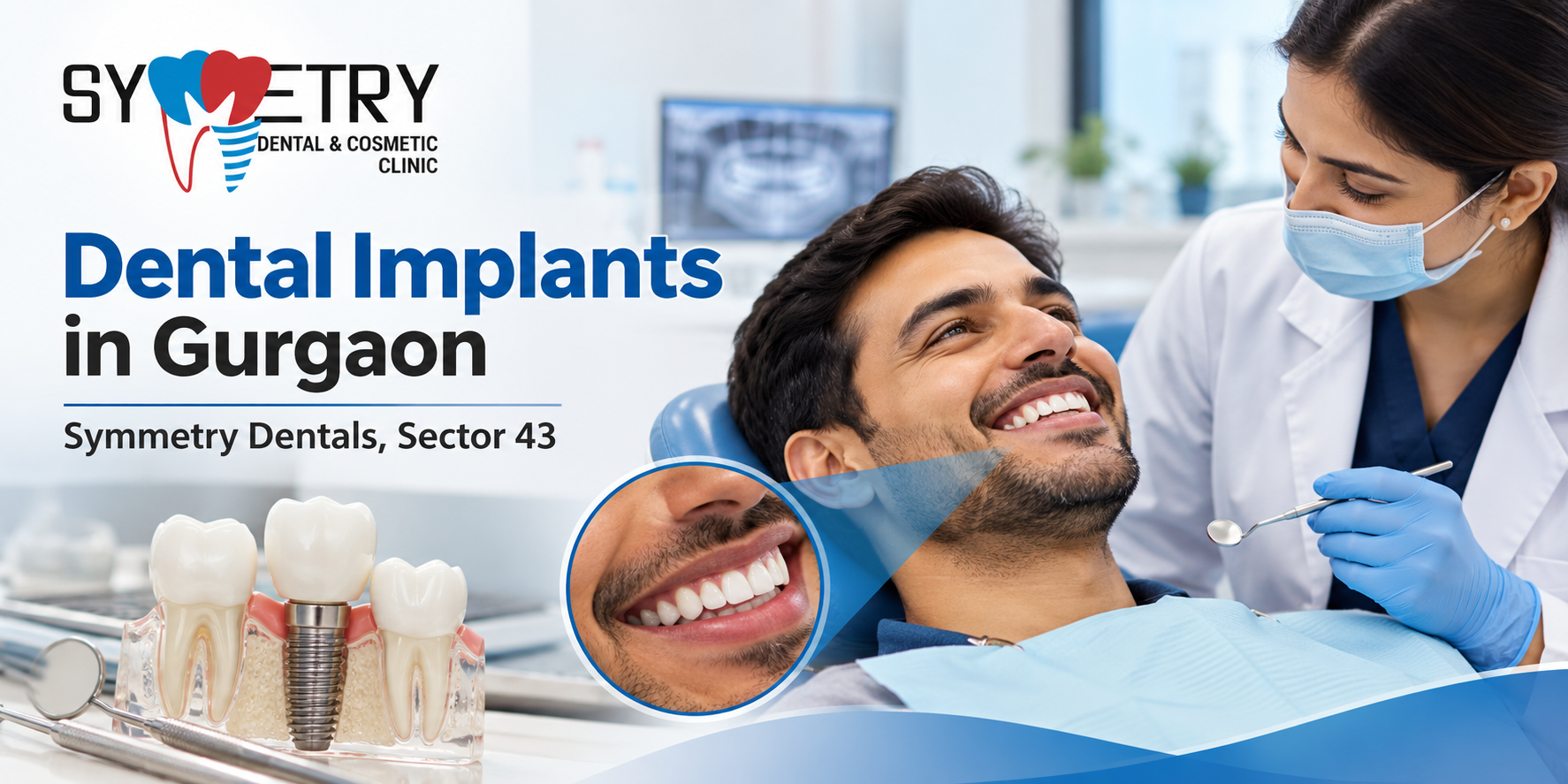
Dental implants replace missing teeth with titanium posts placed into the jawbone, providing a fixed replacement tooth designed to restore chewing function and appearance. At Symmetry Dental & Cosmetic Clinic in Sector 43, Gurugram, implant treatment is carried out by Dr. Sheena Mariya Aneja, an AOMSI-certified Oral & Maxillofacial Surgeon with over ten years of surgical practice across Gurugram and the NCR, and a member of the International Congress of Oral Implantologists. The clinic is located on Sector 43 Service Road, opposite Paras Hospital and minutes from Golf Course Road, DLF Phases 1 to 5 and Sushant Lok.
Whether you are missing a single tooth, several teeth, or have been told that you do not have enough bone for conventional implants, there may still be treatment options available. This page explains what implant treatment involves, which cases we treat, and what you can expect at your first appointment.
Table of Contents
Why Choose Implant Treatment Here?
Dental implant placement is a surgical procedure. The clinician’s experience, the quality of treatment planning, and management of the surrounding bone and soft tissues can all influence the treatment process, especially in complex cases.
Dr. Sheena Mariya Aneja, MDS, Oral & Maxillofacial Surgery
- AOMSI-certified Oral & Maxillofacial Surgeon with an MDS in Oral & Maxillofacial Surgery from SGT University, Gurugram
- Life member of AOMSI and member of AO CMF Switzerland, the International Congress of Oral Implantologists (ICOI), and the Indian Dental Association
- 10+ years of surgical practice in Gurugram, Delhi and the wider NCR
- Consultant Maxillofacial Surgeon at several reputed Gurugram hospitals, with experience in jaw and facial fractures, cysts and tumors
- Certified in trauma care and trained in oral cancer management at the Regional Cancer Center, Trivandrum
Her maxillofacial surgical background is particularly relevant when an implant case involves significant bone loss, previous treatment complications, jaw pathology, or other surgical considerations. Complex cases may require more than routine implant placement, so comprehensive assessment and surgical planning are essential.
Implant Systems We Work With
We work with multiple implant systems, including Nobel Biocare, Straumann, Osstem, Norris and ADIN. We select the implant system based on factors such as bone condition, implant site, treatment requirements, and budget, rather than relying on a single system for every patient.
Implant Treatments We Provide
Single Tooth Implant
A single implant and crown can replace one missing tooth without preparing the healthy teeth on either side, as is typically necessary for a conventional bridge. The implant acts as the foundation for the replacement tooth while helping restore normal chewing function.
Multiple Teeth and Implant-Supported Bridges
When several teeth are missing in a row, an implant-supported bridge can replace them using two or more implants, depending on the treatment plan. This can reduce the number of implants and surgical sites compared with placing an individual implant for every missing tooth.
Full Mouth Implant Rehabilitation
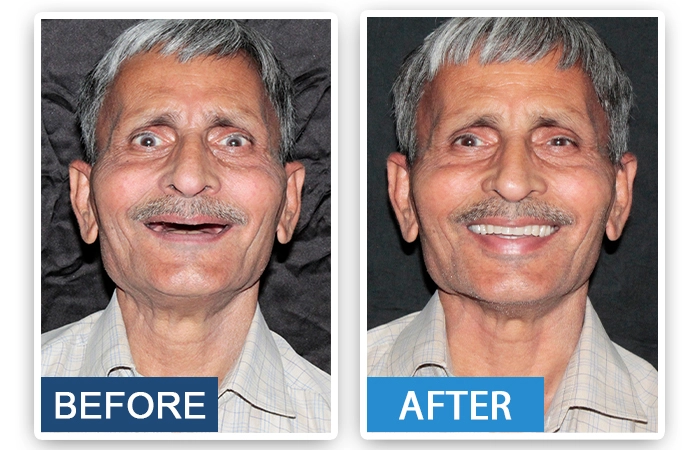
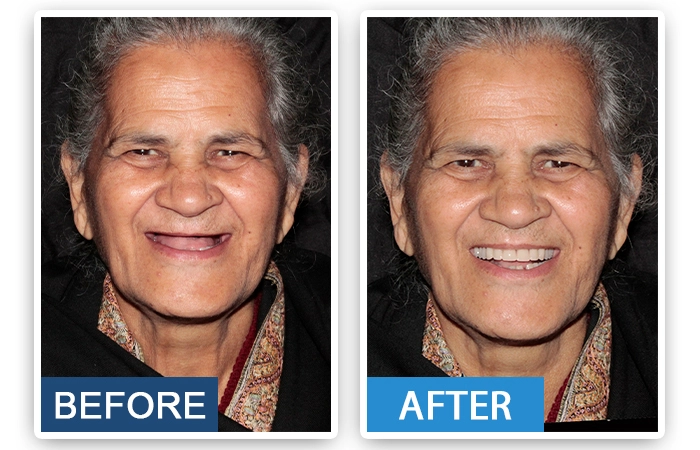
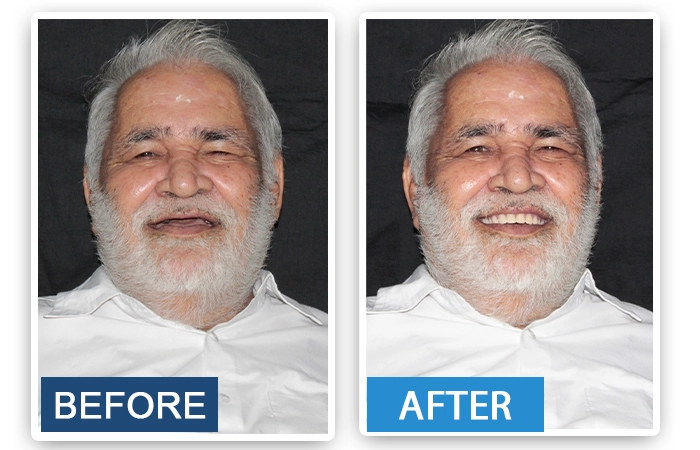
Patients who have lost all or most of their teeth may be candidates for full-arch rehabilitation, where a fixed prosthesis is supported by a carefully planned number of implants. This can provide an alternative to conventional removable dentures for suitable patients.
Zygomatic Implants for Severe Bone Loss
If you have been told you have insufficient bone in the upper jaw for conventional implants, zygomatic implants may be an option in selected cases. These longer implants are anchored in the cheekbone, or zygoma, rather than relying entirely on the severely resorbed upper jaw.
Zygomatic implants are used in carefully selected patients with significant upper jaw bone loss and require specialist surgical planning and expertise.
Bone Grafting and Sinus Lift
When bone volume at the implant site is insufficient, bone grafting or a sinus lift may help create a suitable foundation for conventional implants. These procedures may add a healing period before implant placement. We assess your need for additional procedures during the consultation and imaging stage.
What Does Dental Implant Treatment Involve?
- Consultation, Imaging and Planning: A clinical examination is followed by X-rays and, where required, a CBCT scan to assess bone volume and the position of important structures such as nerves and sinuses. We also review your medical history and treatment goals before preparing a treatment plan.
- Site Preparation, If Needed: Depending on your condition, treatment may include extraction of a failing tooth, bone grafting, or a sinus lift. Grafted areas may need time to heal before placing the implant.
- Implant Placement: The implant is placed into the jawbone under local anesthesia. Sedation may also be available for suitable patients, depending on their needs and the procedure.
- Osseointegration: The implant gradually integrates with the surrounding bone, a process known as osseointegration. This commonly takes about three to six months, although healing time varies by patient and procedure. Where appropriate, a temporary tooth may be provided.
- Abutment and Impression: Once the implant has healed sufficiently, we connect an abutment to the implant. We then take impressions or a digital scan to plan the final crown or prosthesis.
- Crown Fitting: We design the final crown to complement the color, shape, and proportions of your natural teeth. We check it for fit, appearance, and bite before securing it.
- Review and Maintenance: Follow-up appointments allow the implant, gums and bite to be monitored. Good oral hygiene and regular dental reviews are important for maintaining both the implant and surrounding tissues over the long term.
How Much Do Dental Implants Cost in Gurgaon?
The cost of dental implants in Gurgaon varies based on the patient’s individual treatment needs. Two patients replacing the same tooth may have different treatment costs depending on several factors:
- Implant System: Different implant systems, including premium systems such as Nobel Biocare and Straumann, have different pricing and clinical characteristics.
- Number of Implants: Replacing one tooth requires a different treatment approach from multiple implants or full-arch rehabilitation.
- Bone Condition: Bone grafting, sinus lift procedures, or specialized approaches such as zygomatic implants can add surgical stages and associated costs.
- Crown Material: Zirconia, porcelain-fused-to-metal and other restorative materials vary in cost, appearance and properties.
- Imaging and Planning: CBCT imaging and additional planning procedures may be required, particularly for complex cases.
After your examination and required imaging, we provide a written treatment estimate covering the relevant components of your treatment, including the implant, surgery, abutment, and final crown or prosthesis. We can discuss payment options during your consultation.
Be cautious about implant prices quoted without an examination. The final treatment cost depends on your bone condition, the number of implants required, the restorative work, and any additional procedures needed.
Are You a Candidate for Dental Implants?
Many adults who have lost one or more teeth can be considered for implant treatment. However, suitability depends on your oral health, bone condition, medical history, and other individual factors.
During the consultation, we assess:
- Bone volume and density: Whether there is adequate bone to support the planned implant
- Gum health: Active gum disease generally needs to be addressed before implant placement
- Bite: How the opposing and surrounding teeth will place forces on the implant and restoration
- Medical history: Conditions and medications that may affect healing, including diabetes, blood-thinning medication, and certain bone-related medications
- Lifestyle factors: Smoking and other factors that can affect healing and long-term implant health
If you have previously been told that you do not have enough bone for implants, a second opinion may help determine whether additional procedures such as bone grafting, sinus augmentation or, in selected upper-jaw cases, zygomatic implants could be considered.
A Dental Implant Clinic Near You in Gurugram
Symmetry Dental & Cosmetic Clinic is located at Sector 43 Service Road, near Paras Hospital Road and opposite Shalom Hills International School, with on-site parking available.
The location provides convenient access from:
- Golf Course Road and the Sector 42 to 43 corridor
- DLF Phases 1, 2, 3, 4 and 5
- Sushant Lok 1, 2 and 3
- Sectors 42, 44, 45, 46, 53, 54 and 56
- South City 1 and 2, Nirvana Country and Sohna Road
- Millennium City Centre Metro and the Rapid Metro corridor
Patients traveling from Delhi, Manesar, or other parts of the NCR can discuss treatment scheduling during their consultation to help coordinate the required appointments.
Book a Consultation
Symmetry Dental & Cosmetic Clinic
Plot 1308, Sector 43 Service Road, near Paras Hospital Road, opposite Shalom Hills International School, Sector 43, Gurugram, Haryana 122009
Phone: +91 81388 75753 / +91 85698 64255
Email: info@symmetrydentals.com
Hours: Monday to Saturday, 8:00 AM to 8:00 PM; Sunday, 8:00 AM to 2:00 PM
Bring any recent X-rays, scans, or dental reports. If you currently wear a denture, bring it to your appointment so the dentist can assess its fit and function.
Frequently Asked Questions
How much does a single tooth implant cost in Gurgaon?
The cost depends on the implant system, crown material, bone condition, and whether additional procedures such as bone grafting are required. An accurate estimate requires a clinical examination and appropriate imaging. A complete treatment estimate can then be provided based on your individual requirements.
How long does dental implant treatment take?
The overall treatment time varies. After implant placement, osseointegration commonly takes around three to six months, although the timeline differs between patients. Cases requiring bone grafting or a sinus lift may take longer because additional healing time may be required. A temporary replacement may be provided where appropriate.
Is implant surgery painful?
Implant placement is performed under local anesthesia, so the treatment area is numbed during the procedure. Sedation may be available for suitable patients. Some discomfort, swelling or soreness can occur after surgery and is generally managed with the aftercare and medication recommended by the treating clinician.
How long do dental implants last?
Dental implants can function for many years when properly planned, placed and maintained. Their long-term success depends on factors including oral hygiene, gum health, general health, smoking, and regular dental care. The crown or other restoration may require replacement over time due to normal wear.
I was told I don’t have enough bone for implants. Is there anything I can do?
In some cases, yes. Bone grafting or a sinus lift may help create adequate bone for conventional implant placement. For selected patients with severe upper-jaw bone loss, zygomatic implants may also be considered. A detailed examination and imaging are necessary to determine which options are appropriate.
Are implants better than dentures or a bridge?
The appropriate option depends on your oral health, bone condition, treatment goals, budget, and individual circumstances. Implants can replace a missing tooth without preparing adjacent healthy teeth, while implant-supported restorations can provide a fixed alternative to removable dentures for suitable patients. Bridges and dentures remain appropriate treatment options for many patients.
Can I have implants if I have diabetes or high blood pressure?
Many patients with controlled medical conditions can undergo implant treatment, but suitability depends on individual circumstances. Diabetes, blood-thinning medication, certain bone-related medications and smoking can affect healing and need to be discussed before treatment. Bring an up-to-date list of your medications to your consultation.
What is a zygomatic implant?
A zygomatic implant is a specialized, longer implant anchored in the cheekbone, or zygoma, rather than relying entirely on the upper jawbone. It may be considered for selected patients with severe upper-jaw bone loss and can sometimes reduce the need for extensive bone grafting. It requires careful assessment and specialist surgical planning.
Which implant brands do you use?
We work with Nobel Biocare, Straumann, Osstem, Norris and ADIN implant systems. The appropriate system is selected based on factors such as the treatment site, bone condition, clinical requirements, and budget. The recommended implant system will be discussed with you before treatment.
Do you treat patients from DLF and Golf Course Road?
Yes. Symmetry Dental & Cosmetic Clinic is located on Sector 43 Service Road, near Paras Hospital Road and opposite Shalom Hills International School. The clinic is accessible from Golf Course Road, DLF Phases 1 to 5, Sushant Lok, and surrounding sectors.
What happens at the first implant consultation?
The first appointment generally includes a clinical examination, relevant X-rays and, where required, a CBCT scan. Your dental and medical history, treatment options and expected timeline are then discussed. Based on the findings, you receive a treatment plan and cost estimate so you can make an informed decision about proceeding.