

A confident smile isn’t just a cosmetic perk—it fundamentally shapes how we feel and interact, whether in school, at work, or later in life. Braces, dental brackets, and clear aligners offer practical solutions for everyone, from children to professionals and seniors, addressing issues like crooked teeth, bite alignment, and speech clarity. we skip the fluff. This guide provides clear, straightforward insights to help you make informed decisions about orthodontic care, no matter your age or lifestyle
Signs You Need Braces
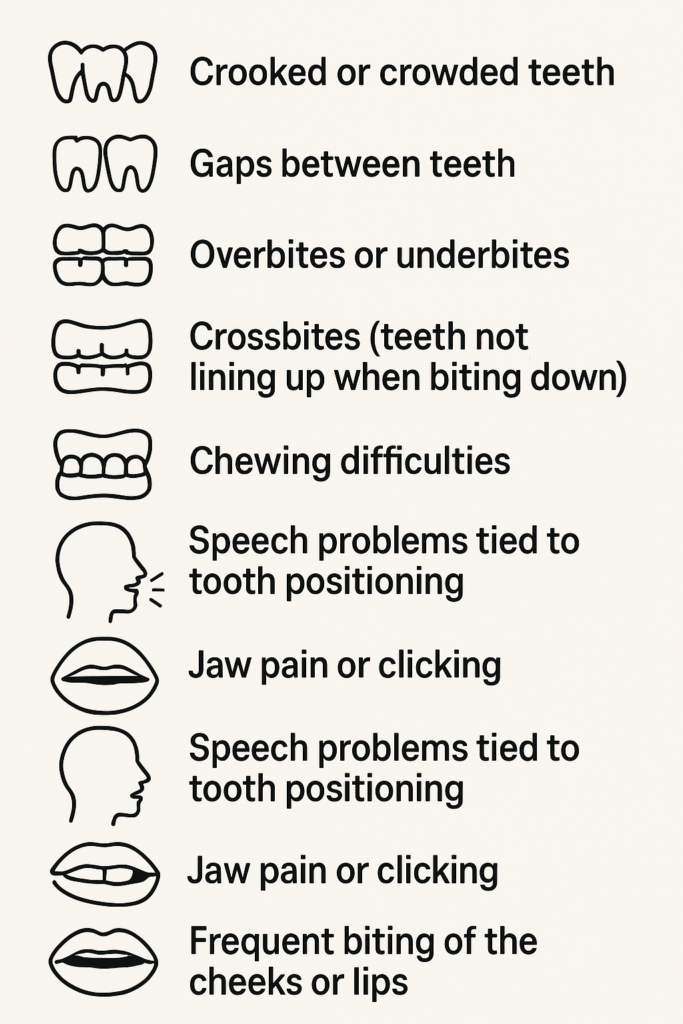
Not sure if braces are needed? Look for these clear signs:
- Crooked or crowded teeth.
- Gaps between teeth.
- Overbites or underbites.
- Crossbites (teeth not lining up when biting).
- Open bites (gap between front teeth when biting down).
- Chewing difficulties.
- Speech problems tied to tooth positioning.
- Jaw pain or clicking.
- Frequent biting of the cheeks or lips.
Braces aren’t about looks alone. Left unchecked, these issues can cause long-term oral health problems. If any of this sounds familiar, Book an evaluation for braces in Gurgaon.
Different Types of Braces
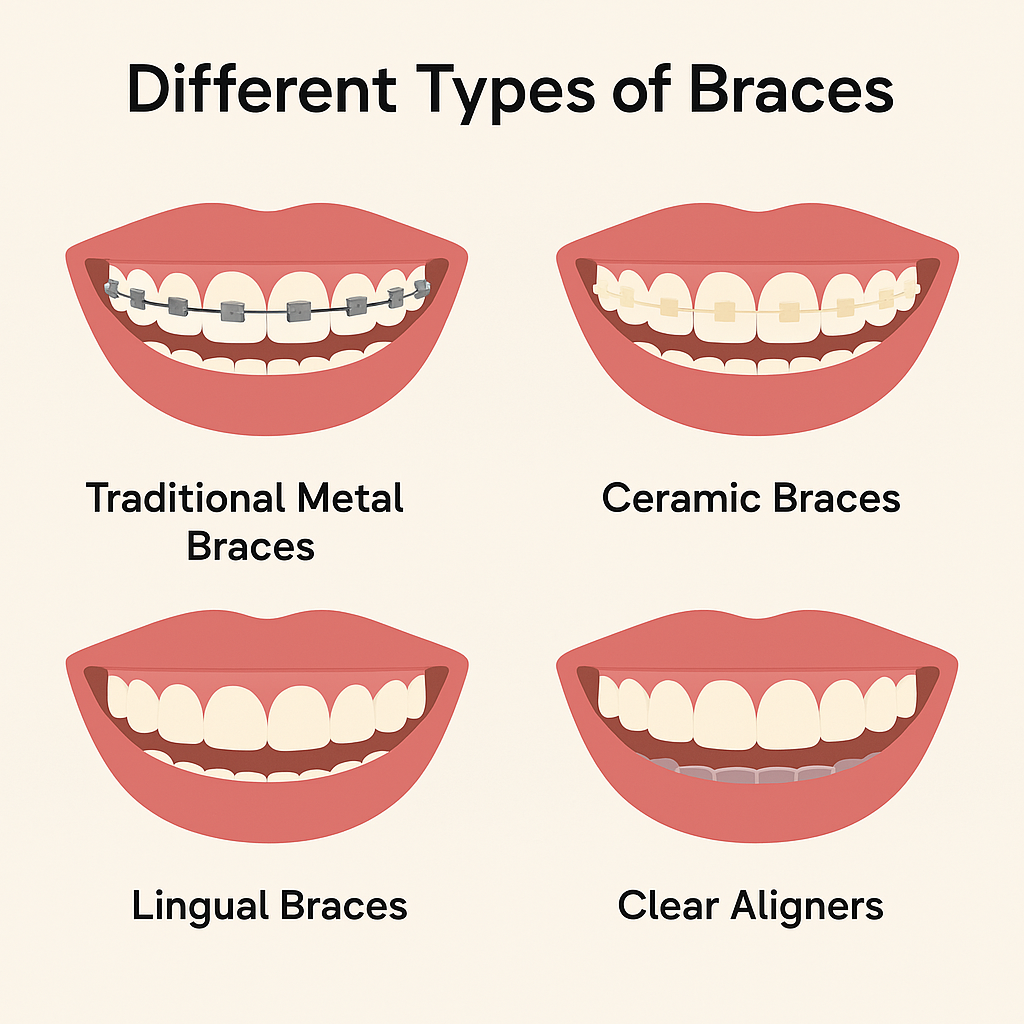
What works at one age might not suit another. Here are practical orthodontic options for every age group:
Metal Braces
These are the traditional choice and are made of stainless steel. They are highly effective for correcting even complex dental problems. Small brackets are attached to the teeth, connected by wires that are tightened over time to shift teeth into place
Ceramic Braces
These work like metal braces but use tooth-colored or clear brackets. This makes them less noticeable, which many teenagers prefer for a more discreet look.
Clear Aligners
These are removable plastic trays custom-made to fit over your teeth. They are nearly invisible and can be taken out for eating or brushing. Clear aligners are ideal for milder cases and require discipline to wear them as instructed.
Lingual braces
Lingual braces attach behind teeth, making them invisible externally. They’re custom-made, discreet, but more expensive and challenging to clean. Initial discomfort or speech difficulty can occur due to their placement.
Self-ligating braces
Self-ligating braces use built-in clips rather than elastic bands to hold wires, offering quicker adjustments, reduced friction, easier oral hygiene maintenance, better comfort, and potentially shortening overall orthodontic treatment time compared to traditional options.
Retainers
Not braces, but they keep teeth from shifting after treatment.
We help you choose based on your teeth, your lifestyle, and your budget.
Braces Cost Breakdown in India
There’s no one-size-fits-all price. Here’s what you should expect for braces cost in India:
- Metal Braces: Most affordable and sturdy.
- Ceramic Braces: Cost a bit more for aesthetics.
- Clear Aligners: Higher-end, customized, and more expensive.
At Symmetry Dental, we offer clear pricing, detailed braces treatment plans, and flexible payment options.
How Long Will I Need to Wear Braces?
Braces treatment usually takes 12–24 months. Complex dental problems can take longer. Regular dental check-ups, good oral hygiene with braces, and following orthodontist instructions keep treatment on track.
Foods and Habits to Avoid with Braces
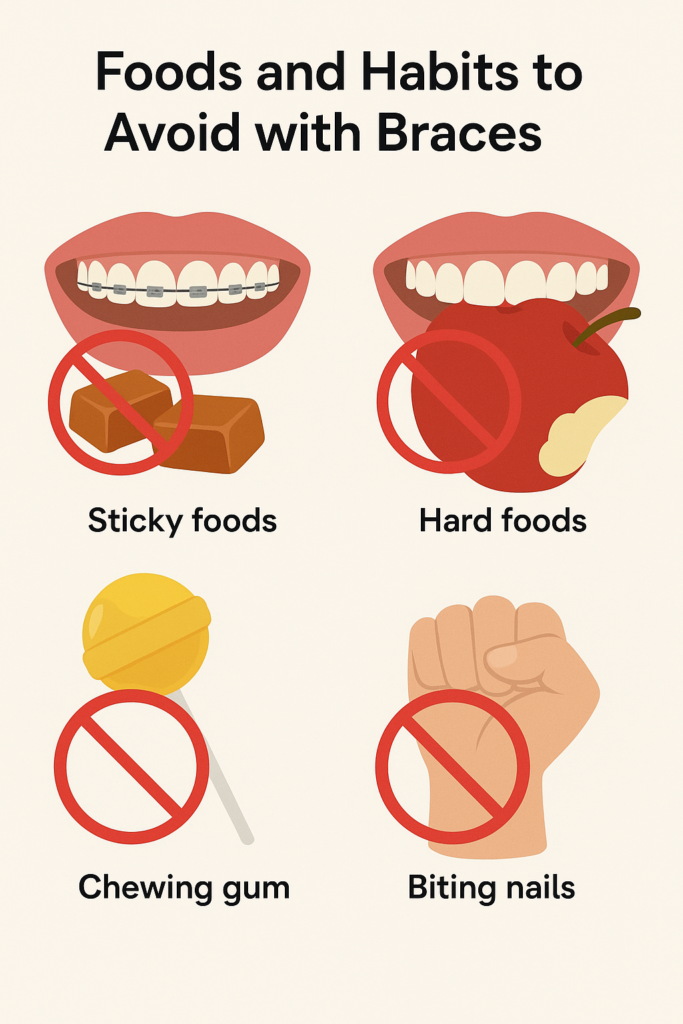
Certain foods can damage braces or slow down treatment. Hard foods like nuts, popcorn, and raw carrots might break brackets or wires. Sticky items, such as chewing gum, toffees, or caramel, can get caught in braces and pull them loose. Sugary snacks and drinks, like candy or soda, increase the risk of cavities, especially since cleaning around braces can be tricky. Instead, opt for softer, braces-friendly choices like yogurt, mashed potatoes, steamed vegetables, and fruits like bananas.
Braces for All Ages
1. Early Childhood (Ages 7–12):
- Palatal expanders: widen narrow jaws.
- Space maintainers: preserve space for permanent teeth.
- Partial braces: fix early alignment issues.
2. Adolescence (Ages 13–18):
- Traditional metal braces: effective, durable, affordable.
- Ceramic braces: less visible, aesthetically appealing.
- Clear aligners: discreet, suitable for responsible teens.
3. Adults (Ages 19+):
- Clear aligners (Invisalign): discreet, convenient, comfortable.
- Ceramic braces: subtle, effective for complex cases.
- Lingual braces: invisible, attached behind teeth.
4. Universal Option (All Ages):
- Traditional metal braces: universally effective, affordable, reliable.
How to Maintain Oral Hygiene with Braces
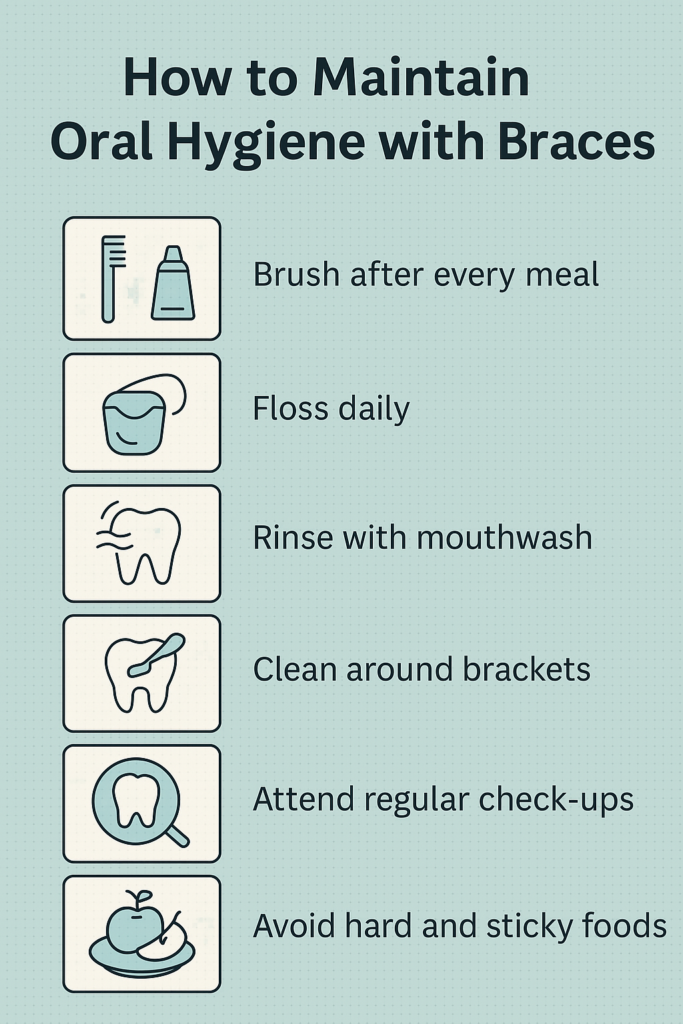
Braces make cleaning more challenging — but it’s crucial:
- Brush thoroughly after every meal to remove food particles and prevent plaque buildup.
- Use floss threaders or a water flosser daily to effectively clean between teeth and braces.
- Regularly rinse with an antibacterial mouthwash to reduce bacteria and maintain fresh breath.
- Schedule regular dental check-ups to monitor orthodontic progress and oral hygiene.
- Limit sugary and acidic foods to prevent cavities and enamel erosion.
- Avoid hard, sticky, or chewy foods to protect braces from damage.
- Drink plenty of water to wash away food debris and maintain hydration.
Do Braces Hurt, and How Can I Manage Discomfort
Braces don’t cause constant pain, but some discomfort is normal, especially after adjustments. When wires are tightened, teeth may feel sore for a few days as they shift into place. This is a sign the treatment is working. To manage this, eat soft foods like soup or smoothies during those days. Over-the-counter pain relievers, as advised by your orthodontist, can also help..
Will Braces Affect My Appearance and Confidence?
Many teenagers and professional worry about how braces will look. While metal braces are noticeable, options like ceramic braces or clear aligners offer a subtler appearance. It’s normal to feel self-conscious at first, but most people adjust quickly. Focus on the end goal—a straighter, healthier smile. Wearing braces shows you’re taking care of yourself, which can boost confidence over time. Encourage teenagers to embrace this journey and offer support to help them feel positive about their treatment.
What Are Retainers, and Will I Need to Wear Them After Braces?
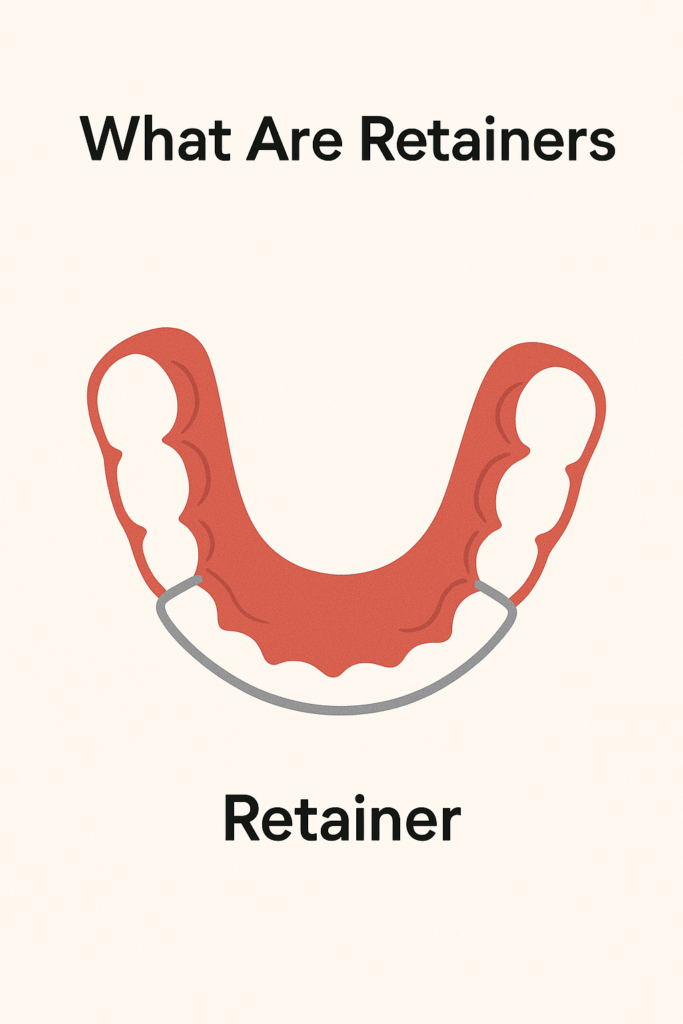
Once braces come off, retainers are essential to keep teeth in their new positions. Teeth naturally try to shift back, a process called relapse, so retainers prevent this. They can be removable, like clear plastic trays, or fixed, like a wire bonded behind the teeth. Most teenagers need to wear retainers full-time for a few months, then only at night for a longer period. Following the orthodontist’s instructions is critical for lasting results.
Expert Braces and Orthodontic Care in Gurgaon at Symmetry Dental
If you’re looking for Braces treatment and expert orthodontic care in Gurgaon, Symmetry Dental provides personalized solutions tailored to your needs. Our skilled orthodontists use advanced techniques and modern technology to ensure efficient treatment and lasting results. From traditional braces to clear aligners, we focus on achieving the healthy, confident smile you deserve.
Got Brace Questions? We’ve Got Answers
Got questions about braces, aligners, or orthodontic care? We’re here to clear the confusion, calm the nerves, and help you smile with confidence. Whether you’re considering your first set of braces or exploring options for your teen, we’re just a message away.
No bots, no fluff—just real, friendly advice from people who genuinely care about your smile journey.
🏥 Visit us:
Symmetry Dental, 1308 Sec 43, Near Paras Hospital, Sushant Lok, Gurgaon, Haryana 122001
📞 Call us:
+91-8138875753, +91-8569864255
I had no idea that jaw pain and frequent cheek biting could be signs you need braces. This is really helpful for people like me who might overlook these issues!